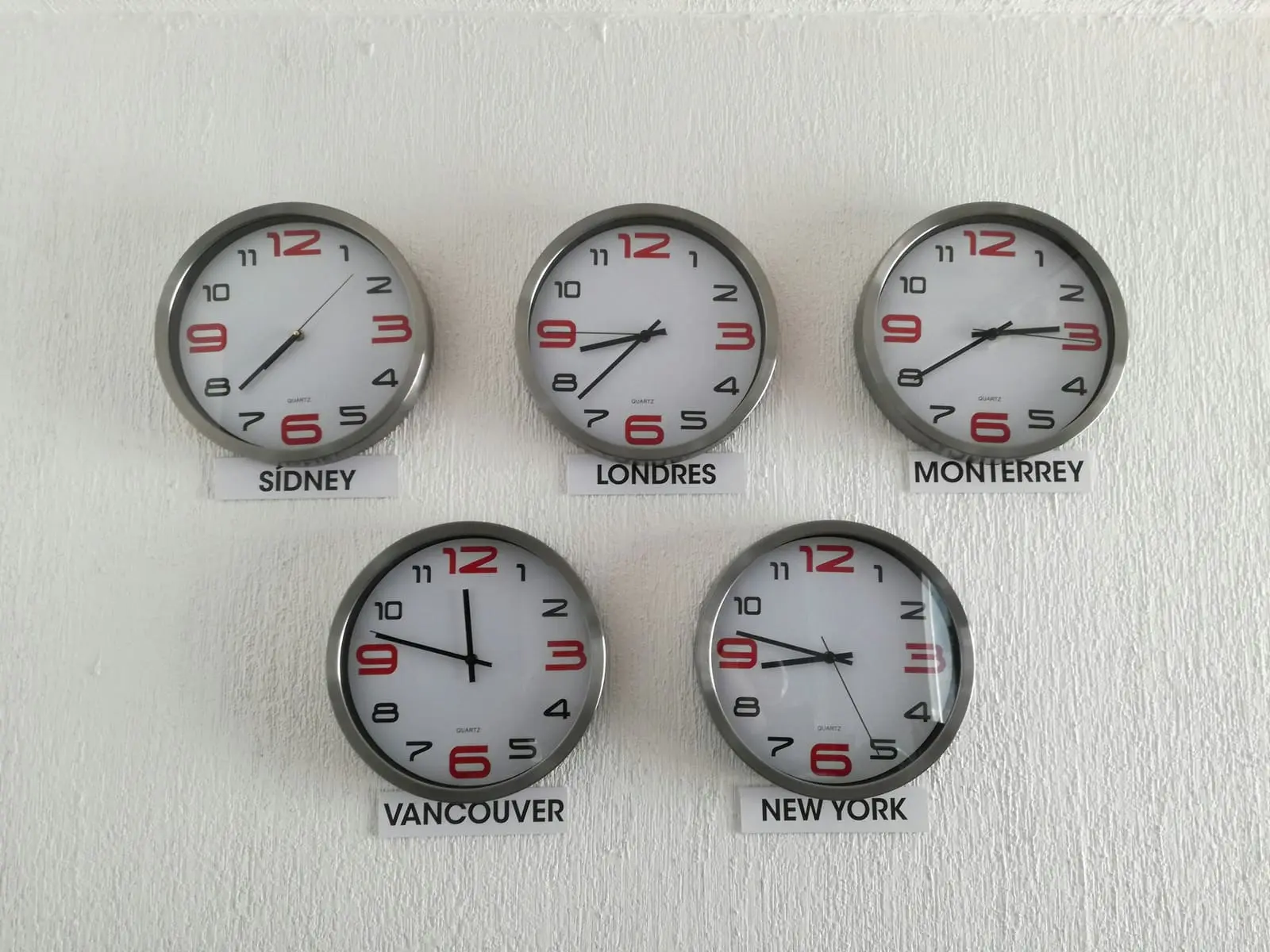

For a UK company, India is the easiest offshore engineering market to work with day to day, and the reason is the clock. Ahmedabad is four and a half hours ahead of London in British Summer Time and five and a half in winter. A team that starts at nine in Ahmedabad has already done half a day when London logs on, and the two working days overlap from the UK morning until early afternoon. Most of the friction UK buyers expect from offshoring is a US problem that does not apply here.
This guide covers the practical parts: hours, cadence, data protection, contracts, money and the questions to ask. It follows the same shape as our guide for US companies, with the UK specifics in each section.
The overlap, in real terms
A nine-to-six day in Ahmedabad is 4:30 am to 1:30 pm in London during summer and 3:30 am to 12:30 pm in winter. Shift the Indian day an hour later, which is common for teams working with the UK, and the overlap runs from about nine in the morning to two or three in the afternoon London time.
That is enough for a stand-up, a working session and a demo in the same day, all live.
A cadence that uses the overlap
The pattern that works, sprint after sprint:
- A short stand-up at ten or ten thirty London time, when both sides are at their desks.
- Working sessions and pairing in the late morning.
- A weekly demo on a fixed day, late morning London, of working software rather than slides.
- Written decisions in the shared board, so the India morning is never blocked waiting for a message.
- Your review time in the UK afternoon, with comments on pull requests and tickets ready by the next India morning.
The failure mode is the opposite: a UK team that reviews late in the evening and expects answers overnight. Nothing is wrong with that in itself, but it turns a one-day loop into a two-day one. Agree the loop explicitly.
UK GDPR when your processor is in India
Under UK GDPR, a development team that handles personal data on your behalf is a processor, and India is a third country with no UK adequacy decision. Two things follow.
You need a data processing agreement with the Article 28 terms: instructions, confidentiality, security measures, sub-processors, assistance with rights requests, deletion at the end, and audit rights. And you need a transfer mechanism: the International Data Transfer Agreement, or the UK Addendum to the EU standard contractual clauses, with a transfer risk assessment on file.
In practice the paperwork is lighter than it sounds when the team does not need personal data at all. Development and test environments can run on synthetic or anonymised data, production access can be limited to named people for support, and the DPA describes exactly that.
If your customers are in the EU as well, the EU GDPR runs alongside, with the EU standard contractual clauses for the transfer. The same DPA can cover both.
Contracts
A master services agreement with a statement of work per engagement is the standard structure. For a UK client the points to check are the governing law and courts, the intellectual property clause and when ownership passes, the confidentiality terms, the notice period for changing team size or ending the engagement, what happens when a named engineer leaves, the liability cap, and insurance.
Governing law can be England and Wales; an Indian company can accept that, and many do. Ask for it if it matters to your legal team. Read the IP clause for the moment ownership transfers and for the chain of assignment from the vendor's own employees.
Money
Ask which currency the vendor invoices in and how exchange risk is handled.
Services bought from a supplier outside the UK are usually outside the scope of UK VAT on the supplier's invoice, with the UK business accounting for VAT under the reverse charge; your accountant will confirm how it applies to you.
Holidays and the working week
India has a different public holiday calendar, and some holidays vary by state. Ask for the year's list at the start and put it on the shared calendar next to the UK bank holidays. Diwali is the one that surprises UK teams: it falls in October or November and a team is typically away for several days. Plan releases around it.
What to ask before you sign
- Which hours will the team work, and which of them overlap with London?
- Who is the named project manager, and who do we escalate to?
- Which DPA and transfer documents will you sign, and what data do you need for development?
- Which ISO or other certifications do you hold, and can we see the certificates with their scope?
- Where does the code live from day one, and when does IP assignment take effect?
- What is the notice period to change the team, and what happens if someone leaves?
- Which currency do you invoice in, on what terms?
A vendor that answers all eight in writing, without hedging, has done this before. That is the test. Our own answers are on the United Kingdom page, the security page and the dedicated development teams page.